
 Weak
Weak
Wonders
Urban buildings
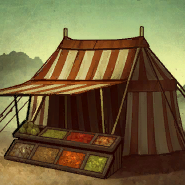
Projects (exactly this level)
Convoy ICouncil IDecree IFestival IHunt IInquiry IOlympiad I
Projects (this level or higher)
Archive IForum ITreasury I
What each city culture level, from Weak to Legendary, costs, gives and unlocks.
A city gains culture from buildings, specialists, projects and events. When it reaches the level's threshold it advances and a culture event fires. Higher culture is worth more Victory Points and unlocks better wonders, buildings, units and projects, but each Citizen consumes more.
| Level | Culture to advance | VP per city | Governor XP/turn | Citizen consumption | Level-up project |
|---|---|---|---|---|---|
| Weak | 100 | 1 | 4 | -1  /Pop /Pop | Council I |
 Developing Developing | 500 | 2 | 6 | -2 /Pop -1  /Pop /Pop | Council II |
 Strong Strong | 2,000 | 3 | 8 | -3 /Pop -1 /Pop -1  /Pop /Pop | Council III |
 Legendary Legendary | 5,000 | 4 | 10 | -4 /Pop -1 /Pop -1 /Pop -1  /Pop /Pop | Council IV |
Culture to advance is the culture a city needs to leave that level, from 100 (Weak to Developing) up to 5,000 (past Legendary). Past Legendary each further culture step costs 5,000 × (steps + 1) and is worth +1 VP. Governor XP per turn is what a governor earns each turn from the city's culture level. The level-up project, Council I to IV, is the city's default project at that level.
Tiered city projects such as Council, Festival, Decree, Inquiry, Hunt, Olympiad and Convoy need the city at exactly that level. The Treasury, Forum and Archive tiers need at least that level.
Weak Developing 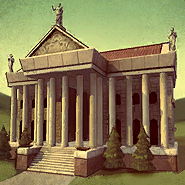 Courthouse
 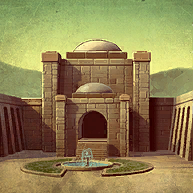 Library
 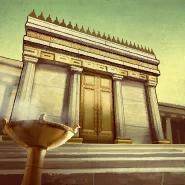 Temple · Holy Site
 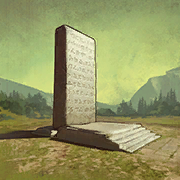 Stele · Aksum Stele Temple of Solomon · Holy Site Strong
 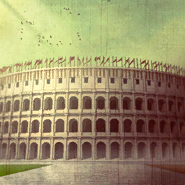 Amphitheater · Odeon
 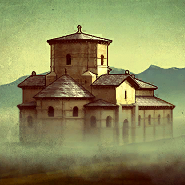 Cathedral · Cathedral Cathedral · Cathedral
 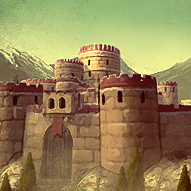 Citadel · Garrison Stele · Aksum Stele Cathedral · Cathedral Cathedral · Cathedral Cathedral · Cathedral Cathedral · Cathedral Legendary Stele · Aksum Stele
 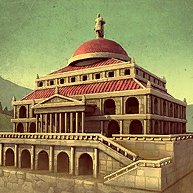 Palace · Courthouse
 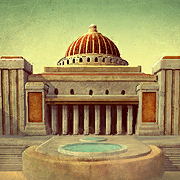 University · Library
 Culture-gated units come in pairs. The Developing unit, such as the Battering Ram, Hoplite or Hastatus, goes obsolete at Strong and is replaced by its upgrade, such as the Siege Tower, Phalangite or Legionary. Buildings and wonders also need their techs and other requirements; only the culture requirement is shown here.
| Level | Extra capture turns | Extra assimilate turns | Assimilation per turn |
|---|---|---|---|
| Weak | +0 | +0 | −1 |
| Developing | +1 | +10 | −2 |
| Strong | +2 | +20 | −3 |
| Legendary | +3 | +30 | −4 |
A captured foreign city needs 20 assimilate turns plus the founder's culture bonus, and its yields are modified by -50% until it assimilates. The countdown moves by the city's current culture level each turn, so higher culture assimilates faster. Extra capture turns add to the base of 2; see City Capture Mechanics.
The Development option in advanced setup has nothing to do with city culture. It sets how developed the AI nations are when the game begins (average cities, capital population and free techs), and how many turns the AI waits before building wonders and founding religions.
| Setting | Avg cities | Capital pop | Free techs | AI no-Wonder turns | AI no-Religion turns | Notes |
|---|---|---|---|---|---|---|
| Default | — | — | — | — | — | The player receives the default number of Cities and Technologies for the currently selected game options. |
| None | — | — | — | — | — | Existing Nations don't start with any extra Cities or Technologies. |
| Fledgling | 2 | 2 | 2 | 5 | 4 | Existing Nations start with an average of 2 Cities and 2 Technologies. |
| Established | 3 | 3 | 3 | 10 | 8 | Existing Nations start with an average of 3 Cities and 3 Technologies. |
| Advanced | 4 | 4 | 4 | 15 | 12 | Existing Nations start with an average of 4 Cities and 4 Technologies. |
| Massive | 5 | 5 | 5 | 20 | 16 | Existing Nations start with an average of 5 Cities and 5 Technologies. |